FG Denies “Christian Genocide” While Reports Show Thousands of Christian Deaths in Nigeria’s Violence
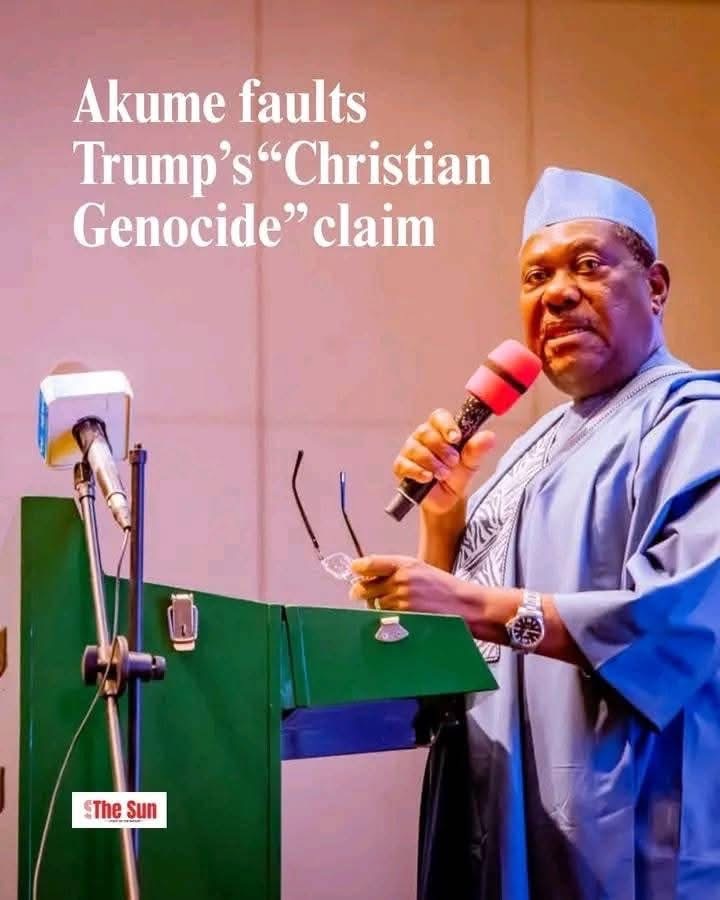
The federal government of Nigeria has officially rejected claims that Christians are being subjected to genocide, even as mounting evidence highlights relentless attacks on Christian worshippers and communities across the country. The denial was articulated on Wednesday by the Office of the Secretary to the Government of the Federation (SGF), Senator Dr. George Akume, in a wide-ranging statement on the security crisis afflicting Nigeria.
Sen. Akume said in the press release: “Across Nigeria, Christians and Muslims have been equally victimised. No credible international organisation has ever classified the crisis as a genocide against Christians or any group.”
In his statement titled “Press Statement by the Secretary to the Government of the Federation (SGF) on the Evolution of Violent Extremism… and Clarification on Claims of ‘Christian Genocide’”, the SGF outlines two principal fronts of contemporary violence in Nigeria: the ideological insurgency in the north-east (driven by Boko Haram and ISWAP) and the economically motivated banditry and illegal mining crises in the north-west. The statement argues that the motivations behind much of the violence are not purely religious extermination but instead rooted in economic inducements, land disputes, resource control and ideological extremism.
The SGF further warned that: “The current misrepresentation of the crisis as ‘genocide against Christians’ fuels dangerous religious tensions, emboldens extremist and criminal factions seeking to exploit sectarian narratives … and undermines Nigeria’s longstanding efforts to build constructive international security partnerships.”
But the ground reality tells a more troubling story for Christian communities
Despite the government’s framing, several independent reports and documented incidents raise serious questions about targeted violence on Christians in Nigeria. Among them:
A report by the International Society for Civil Liberties and Rule of Law (Intersociety) claims that “more than 50,000” Christians have been killed since 2009, with some 30,250 killed since 2015 alone.
The Open Doors charity, which monitors persecution of Christians, states that “more believers are killed for their faith in Nigeria than anywhere else in the world.”
A resolution by the European Parliament notes that between 2019 and 2023 nearly 17,000 Christians in Nigeria were killed in targeted attacks because of their faith; in just the first seven months of 2025 more than 7,000 victims and about 7,800 kidnappings were reported.
On 19 November 2025, an attack on a church in Eruku, Kwara State saw at least two people killed and the pastor plus worshippers abducted.
A raid on a Christian farming community in Zike, Plateau State in April 2025 resulted in at least 40 dead, many of whom were part of a Christian-dominated ethnic group, amongst others.
While Sen. Akume emphasises that the violence cuts across religious lines and includes both Christian and Muslim victims, Christian-rights groups and local leaders argue that Christian communities—particularly in the Middle Belt, north-central and north-western zones—are disproportionately impacted and often under-protected. One expert researcher noted: “These attacks are indiscriminate: they attack state institutions, they target Nigerians in their places of worship, they target Nigerians in civilian locations … In essence, it is a war against Nigeria.”
In response to the government’s rejection of the “genocide” framing, the SGF’s statement contends that mislabelling the crisis as “Christian genocide” risks inflaming sectarian divisions and facilitating external pressure that may hamper sovereign security-policy choices.
The way the violence is characterised influences policy, domestic legitimacy, international cooperation and the scale of response. If Christian communities believe they are being intentionally targeted and under-protected, trust in government and security agencies is eroded. From the federal side, acknowledging a targeted campaign against Christians could carry political, constitutional and diplomatic implications.
The federal government’s rejection of the “Christian genocide” label represents a deliberate attempt to frame Nigeria’s security challenges as broad, multi-dimensional threats—not narrowly sectarian or religious. Yet the significant body of evidence documenting attacks on Christian individuals, congregations and communities raises stark questions about protection, response and the adequacy of current policies. Whether the violence will be addressed simply as part of general insecurity or as targeted persecution remains one of the defining issues of Nigeria’s security landscape in the months ahead.